UroPartners is proud to announce the launch of our revolutionary Interventional Radiology (IR) Center, offering a new era of minimally invasive urologic treatments for patients in the Chicagoland area. Our center boasts the latest advancements in IR technology, coupled with the expertise of highly-skilled physicians that have the highest level of certification from the American Board of Medical Specialties: the Certificate of Added Qualifications in Vascular and Interventional Radiology.
Interventional radiology (IR) utilizes image-guided techniques to diagnose and treat a wide range of urologic conditions. Unlike traditional surgery, IR procedures are minimally invasive, offering patients:
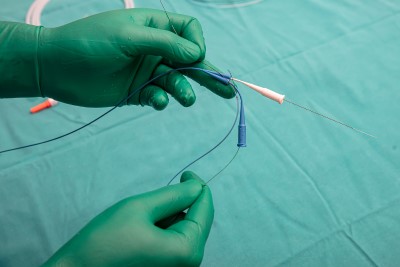
At UroPartners, we understand that a diagnosis of a urologic condition can be stressful. Our IR Center is designed to provide patients with a minimally invasive option, offering the potential for faster recovery and a quicker return to normal life.
If you or a patient are interested in learning more about our Interventional Radiology Center and how it can benefit your urologic care, contact UroPartners today. We offer convenient scheduling options and consultations to discuss your specific needs.
Phone: (847) 957-4670
Fax: (847) 957-4678
The latest imaging services, conveniently available at our Westchester facility.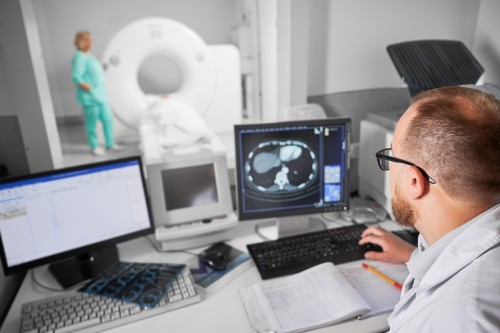
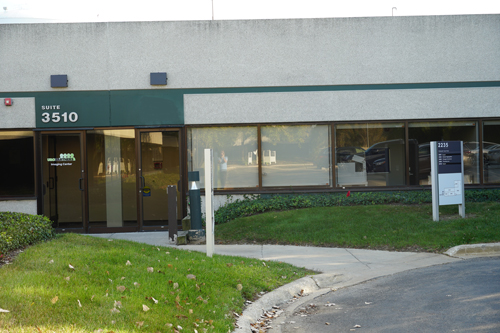
Our imaging center is located at: 2235 Enterprise Drive, Suite 3510, Westchester, IL 60154.
When a patient is not feeling well or experiencing unusual symptoms, an early diagnosis is essential to recovery. Our imaging technology provides accurate diagnostics for identifying, treating and monitoring conditions.
CT scans: An advanced imaging technique that produces cross-sectional images of the anatomy.
Computed tomography (CT) is a sophisticated imaging technique that reveals the anatomy at different levels. It is performed to screen for and diagnose many conditions, including kidney stones and issues that may cause bleeding, as well as diseases involving the bladder, lymph nodes, kidneys and other intra-abdominal organs.
During CT imaging, the patient lies on a table that passes inside the scanner while an x-ray tube rotates around. With each rotation, the x-ray produces a single cross-sectional “slice,” allowing the physician to see different planes of the body.
The procedure:
A CT scan can take about 10 to 30 minutes. The patient should not eat or drink for four hours before the appointment. The patient may be asked to drink an oral contrast, or the tech may place an IV to inject a contrast dye, to better see the blood vessels and organs in the abdomen/pelvis area. The physician may also require blood work to check the function of the kidneys prior to IV contrast.
For the exam, a CT technologist will have the patient lay on the table. The table will be guided into the scanning unit – a machine with a large circular opening in the center. The opening of a CT scanner is relatively large when compared with that of an MRI, and the patient’s head, arms and legs extend outside of the machine, so the patient is less likely to feel claustrophobic.
After the procedure:
After the CT scan is complete, the patient can resume a normal diet. If given a contrast dye, the patient should drink plenty of non-caffeinated fluids. Diabetic patients will be given further instructions about when to resume certain medications.
PSMA PET/CT Scan: an imaging test used to detect and locate prostate cancer.
PET scans (positron emission tomography) have long been helping physicians detect cancer and other diseases for decades.
A prostate-specific membrane antigen (PSMA) PET/CT scan is an imaging test used to detect and locate prostate cancer. It is particularly useful for:
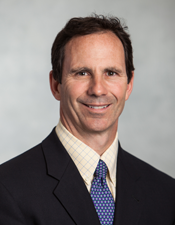 Luke E. Sewall, MD
Dr. Sewall received his medical degree from Johns Hopkins University in Baltimore, where he also completed an internship in surgery. He completed residency training at the University of Wisconsin followed by a fellowship in interventional radiology at the Charles Dotter Institute of Interventional Therapy of the Oregon Health Sciences University. He is certified by the American Board of Radiology and holds a Certificate of Added Qualification in Interventional Radiology. His special areas of interest include non-surgical placement of Endovascular Grafts and is experienced at other interventional radiology techniques.
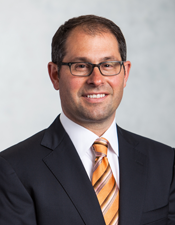 Frank Facchini, MD
Dr. Facchini is a board-certified physician in Interventional Radiology. Dr. Facchini received his medical degree from Loyola University Stritch School of Medicine. He completed an internship in surgery at the University of Chicago. He completed residency training followed by a fellowship in interventional radiology at Northwestern University. He is certified by the American Board of Radiology and holds a Certificate of Added Qualification in Interventional Radiology.
His special area of interest is minimally invasive image guided treatment of cancer (interventional oncology). He maintains an academic appointment as a Clinical Associate Professor of Radiology at Northwestern University and has authored and co-authored numerous articles, scientific exhibits and book chapters.
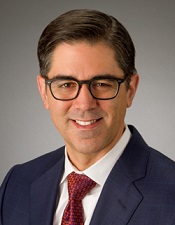 Michael Sichlau, MD
Dr. Michael Sichlau is a board-certified interventional radiologist, who has been in practice since 1999. He has worked with thousands of patients with a wide variety of conditions that can be treated with Interventional Radiology.
Dr. Sichlau received his MD degree from the Northwestern University Feinberg School of Medicine in 1994, and completed his diagnostic radiology residency at the Western Pennsylvania Hospital in Pittsburgh, PA. He completed his fellowship in Vascular and Interventional Radiology at Northwestern University. He is board-certified in diagnostic radiology and holds a Certificate of Added Qualification in Vascular and Interventional Radiology. He is also a Registered Vascular Technologist, and Registered Physician in Vascular Interpretation certified by the American Registry of Diagnostic Medical Sonographers.
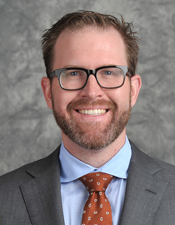 Alex Heaton, MD
Dr. Alex Heaton received his medical degree from University of Illinois at Chicago. He completed his residency training in diagnostic radiology at Georgetown University Hospital in Washington, DC where he served as Chief Resident. This was followed by fellowship training in interventional radiology at the same institution. He is also fellowship trained in neuroradiology through the University of Washington in Seattle, WA. Dr. Heaton is a member of the Society of Interventional Radiology.
Dr. Heaton holds special interests in minimally invasive procedures to treat cancer, uterine artery embolization for uterine fibroids and adenomyosis, as well as portal hypertension in the setting of advanced liver disease.
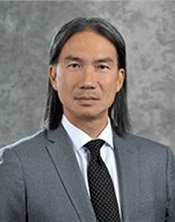 David Hahn, MD
Dr. Hahn is a board-certified physician by the American Board of Radiology with a Certificate of Added Qualification in Vascular and Interventional Radiology. He received his medical degree from Loyola University’s Stritch School of Medicine where he also completed his internship in General Surgery. He went on to a residency in Diagnostic Radiology at Indiana University School of Medicine and completed his fellowship training in Interventional Radiology at Northwestern University. He has since held teaching faculty positions at Northwestern University Feinberg School of Medicine, Rush University of Chicago and the University of Chicago Pritzker School of Medicine.
His areas of interest include endovascular management of peripheral vascular disease, aorto-iliac interventions, uterine fibroids and adenomyosis, pelvic congestion syndrome and May-Thurner, complex hemodialysis interventions, hepatobiliary disease and treatment of vertebral compression fractures.
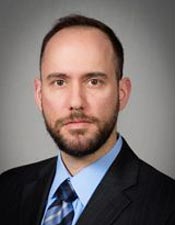 George Athanasatos, MD
Dr. Athanasatos completed his medical school training at the Chicago Medical School. He completed his residency training at Wake Forest Baptist Medical Center followed by an interventional radiology fellowship at the University of Illinois OSF Saint Francis Medical Center. He is board certified by the American Board of Radiology in Diagnostic/Interventional Radiology. He is a member of the RSNA, SIR, ACR, and ARRS.
Dr. Athanasatos performs a variety of interventional radiology procedures, but has a special interest in the treatment of peripheral vascular disease.
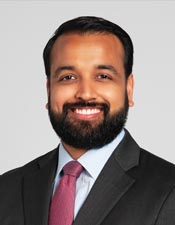 Gaurav Gadodia, MD
Dr. Gadodia is a board-certified vascular & interventional radiologist. He obtained his bachelor’s degree in biomedical engineering at Northwestern University, and his medical degree from Emory University in Atlanta, GA. He then completed an internship in general surgery at Virginia Mason Medical Center in Seattle, WA, followed by diagnostic radiology residency including a year of Early Specialization in Interventional Radiology (ESIR) at the Cleveland Clinic Foundation in Cleveland, OH. He completed his training as an independent interventional radiology resident/fellow physician in Milwaukee, WI at the world-renowned Medical College of Wisconsin VIR program.
His areas of interest include percutaneous treatment of musculoskeletal pathologies, pain interventions, uterine artery embolization, portal hypertension, management of peripheral arterial disease, aorto-iliac interventions, venous disease, interventional oncology, and several other areas of IR.
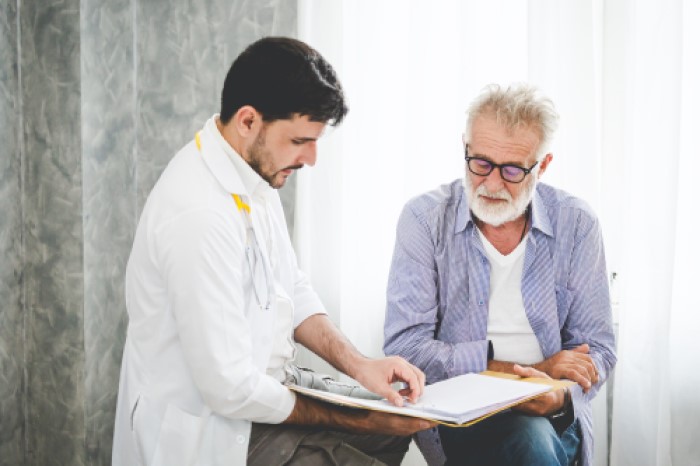
The latest imaging services, conveniently available at our Westchester facility.
Our imaging center is located at: 2235 Enterprise Drive, Suite 3510, Westchester, IL 60154.