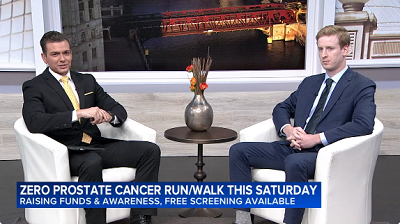

Take a Stand Against Prostate Cancer
Join UroPartners at the ZERO Chicago Run/Walk!
- Sep 25, 2026
 Despite being one of the most common and reliable methods of contraception, vasectomies are still surrounded by a surprising amount of mystery. According to recent research, only about half of U.S. men have a strong understanding of what a vasectomy actually involves.
Because of this information gap, many men confuse permanent sterilization with low testosterone, leading to unnecessary anxiety about the procedure.
Our patients frequently reflect these national statistics. Every year, men walk through our doors with the exact same concerns—almost all stemming from groundless fears and common myths.
A recent KFF survey revealed that 21% of men would consider getting a vasectomy, but nearly 40% of those interested opted out due to fear of pain and complications.
We want to clear up the confusion so you can make a confident, informed decision about your reproductive health.
Nearly 500,000 vasectomies are performed each year in the United States, giving us a vast pool of data on its safety and benefits.
During the procedure, your physician simply cuts and seals the two small tubes (vas deferens) that carry sperm from your testicles to your penis. That’s it.
Yet, several stubborn myths persist. Let’s set the record straight with the facts.
Fact: False. Cutting and sealing the vas deferens does not affect your testicles' ability to produce testosterone. Your body continues producing testosterone normally, and your prostate gland continues making seminal fluid. The only change is that your semen will no longer contain sperm.
Fact: False. Extensive research confirms that a vasectomy has no impact on your ability to achieve or maintain an erection. In fact, a report published in the National Library of Medicine notes that many men experience improved erectile function post-procedure—likely due to increased confidence and the relief of worry-free intimacy.
Fact: Unproven. Repeated, rigorous studies show no significant link between vasectomies and testicular/prostate cancers or cardiovascular disease. While an isolated report in The Journal of Urology noted a negligible risk increase of ~0.9% after 15 years, researchers emphasize this is likely a statistical artifact, as there is no known biological mechanism connecting the two.
Fact: Extremely Rare. For the vast majority of men, mild post-procedure soreness fades within a few days. Persistent discomfort, known as Post-Vasectomy Pain Syndrome (PVPS), affects only an estimated 1% to 2% of patients (according to the Mayo Clinic).
Fact: Unfounded. A vasectomy does not alter nerve sensation, physical stimulation, or the mechanics of an orgasm. You will ejaculate the exact same amount of semen, with the same appearance and consistency as before. Many couples even report a better sex life once the stress of accidental pregnancy is removed!
Instead of worrying about myths, focus on these practical, realistic considerations during your consultation:
Minor inflammation or infection can occur but is rarely serious. Occasionally, a small, harmless bump called a sperm granuloma forms near the sealed tube, or in extremely rare cases, the vas deferens can spontaneously reconnect.
2. How soon can I have unprotected sex?
It takes roughly 2 to 3 months (or 15 to 20 ejaculations) to clear remaining sperm from your system. You must use backup birth control until a follow-up semen analysis confirms zero sperm count.
3. What does the recovery timeline look like?
Most men return to light routine activities within a couple of days. You should avoid heavy lifting, strenuous exercise, and sexual activity for 5 days while using ice packs to manage light swelling.
4. Will there be any visible physical changes?
No. Your genitals, erections, and semen will look completely unchanged. Any minor skin incisions heal quickly with minimal to invisible scarring.
5. Is a vasectomy covered by health insurance?
Coverage varies depending on your plan and carrier. Our billing team is happy to help verify your insurance benefits prior to your appointment.
The most valid factor to weigh before getting a vasectomy is that it should be considered permanent.
While a reversal procedure (vasovasostomy) exists, it is a complex surgery and cannot guarantee restored fertility. You should only move forward with a vasectomy if you are confident that you do not want children (or additional children) in the future.
If you've already met or are close to meeting your health insurance deductible for the year, now is the ideal time to schedule your procedure.
Having a vasectomy completed before December 31 allows you to take advantage of your current health coverage, Flexible Spending Account (FSA), or Health Savings Account (HSA) funds before benefits reset on January 1. Appointment slots tend to fill up fast as the year comes to a close, so booking early ensures you secure a time that fits your schedule.
Overcoming hesitation starts with accurate information. Before scheduling the procedure, our urologists perform a comprehensive, one-on-one consultation to ensure all your questions are answered and that you feel completely ready.
Request a Consultation Online or call our team today to secure your end-of-year appointment.