Waking up multiple times a night, constantly looking for the nearest restroom, or struggling with a weak urinary stream doesn't have to be your everyday normal.
Benign Prostatic Hyperplasia (BPH), also known as an enlarged prostate, is a very common, non-cancerous condition affecting millions of aging men. As the prostate grows, it compresses the urethra—the tube that carries urine from the bladder—causing bothersome lower urinary tract symptoms (LUTS).
At UroPartners, our board-certified urologists across Chicagoland offer comprehensive diagnostic evaluations and a complete range of modern, personalized treatments to help you regain control, sleep through the night, and restore your daily quality of life.
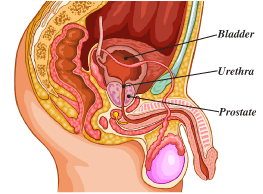
What is the prostate?
The prostate is a walnut-sized gland that forms part of the male reproductive system. The prostate produces the fluid that is expressed during ejaculation and is located just below the bladder and in front of the rectum. The prostate also surrounds the urethra which is the canal through which urine passes out of the bladder.
Recognizing the Symptoms of BPH
Prostate enlargement creates pressure on the urethra and irritates the bladder. You may experience:
Important: If you suddenly find yourself completely unable to pass urine, this is a medical emergency known as acute urinary retention. Seek immediate medical attention.
 Download our free BPH booklet.
How is BPH diagnosed?
Diagnosing BPH begins with understanding your symptoms and ruling out other conditions. At your visit, your doctor will perform a thorough evaluation that typically includes:
What is the treatment for BPH?
Because BPH affects every man differently, we offer a full continuum of evidence-based options:
Summary
No man is destined to accept the inconvient and life style altering symptoms of BPH as a part of aging. If you are ready to explore which treatment is right for you, please call our office at 630-UROLOGY for an appointment with one of our doctors
To request an appointment online, simply click here.
Some content provided courtesy & permission of the American
Urological Association Foundation, and is current as of 9/2026.
Visit www.urologyhealth.org for additional information.